
BY Jacob whiteman salmerón
For thousands of years, humanity has asked the same dreadful, existential questions: What is the meaning of life, what comes after death and, most importantly… What causes someone to be attracted to their significant other? Right? Just me? While there are many possible answers, some biologists claim the existence of a new measure of attractiveness in the form of… the smell of specific genes encoding proteins related to our defences against pathogens?!
“You liking the smell of someone might just be evolution’s version of the red string of destiny“
To understand how we got here, we first need to meet the protagonists of this story: The
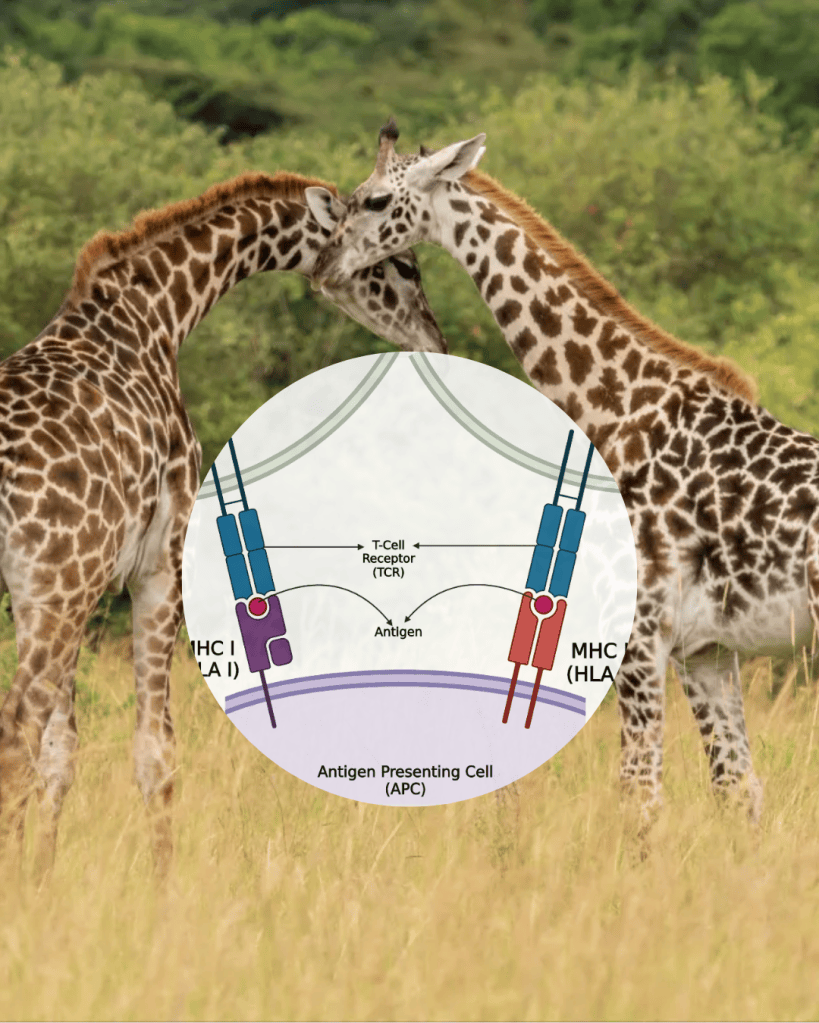
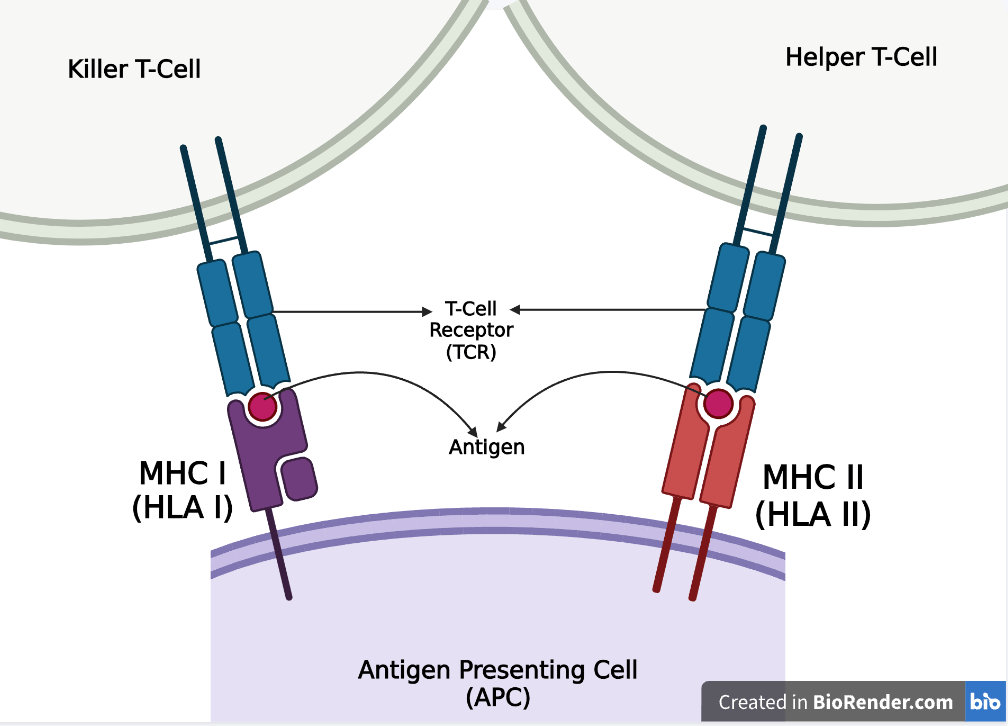
Major Histocompatibility Complex, or MHC for short. Specifically called the HLA in humans, it contains 3 main groups of genes, HLA class I, II and III, which encode for mostly immune related proteins. These include the HLA class I and II receptors and the HLA class III genes, which include a wide assortment of signaling molecules and receptors involved in a variety of immune processes.
You may now be wondering what any of this immunology nonsense has to do with how attractive we are to one another. Well, the first thing to know about the HLA is that it is the most polymorphic region in the human genome; in other words, it is the region in the human genome with the most potential for variation within the population, which , simply put, allows us to defend ourselves against a large variety of pathogens.
When a pathogen enters your body, specialised cells of the immune system, called dendritic cells, take up the invaders, dice them up into pieces (called antigens), and place them on HLA class II receptors; you can think of these as hotdog buns on a stick, with the wiener corresponding to the antigens. They then migrate to the lymph nodes and present it to T cells, which work to end the infection. HLA class I receptors work similarly, but are found in all cells, and present bits of viruses and intracellular bacteria to activated T cells for destruction. However, pathogens vary massively, meaning that (continuing our
analogy) not every wiener fits into every hot dog bun (stop laughing). As such, a high HLA variety directly correlates with your ability to fight off infections, and it would therefore be beneficial for your offspring to inherit the highest variety of HLA genes possible, which could be achieved through sensing the difference in HLA genes, potentially by smell.
It has furthermore been hypothesized that pregnant women would potentially flip this concept on its head and prefer the smell of HLA genes similar to their own. This would allow for more connection with family at a time when their support is essential, and with the baby, with which it is crucial for the mother to bond with. Indeed, several studies involving women taking oral birth control claim to show this phenomenon, with many linking it to a hormonal response. However, there are no reputable studies referring to these effects on pregnancy, and as such, this remains as an unproven hypothesis.
Here, our story takes a bit of a sad turn, as given the current literature it is difficult to say that this is actually occurring in humans. While there is many animal studies and empirical evidence, much of it is now 20-30 years old, the methodology often involves rating smells by ambiguous parameters such as intensity or attractiveness, the mechanism behind our ability to smell HLA genes has not (as of yet) been formally described and a recent meta-analysis found no statistical significance regarding HLA dissimilarity as a driver of attractiveness across a large cohort of studies in the field. However, the phenomenon is described as occurring in a variety of mammals, and new studies are still being published, contributing further to our understanding.

So, in short, while this is evolutionarily plausible, it is hard to say whether it is real. But… you liking the smell of someone might just be evolution’s version of the red string of destiny… one can never really know.


Leave a Reply