
By Carmen García barajas
What is an Eclipse?
An eclipse is an astronomical event where three celestial bodies become aligned so that one blocks the light from another or hides it in a shadow. From the Earth we can observe two main types of eclipse: solar and lunar.
Solar Eclipse
On 12 August, we were able to experience one of the most unforgettable moments of our lives: a solar eclipse. Although most of Europe experienced a partial eclipse, part of northern Spain was able to enjoy the total eclipse. The process took a total of approximately three hours, whilst the entire event lasted just under two minutes!
But how do solar eclipses happen? Well, it’s all down to a remarkable astronomical coincidence.
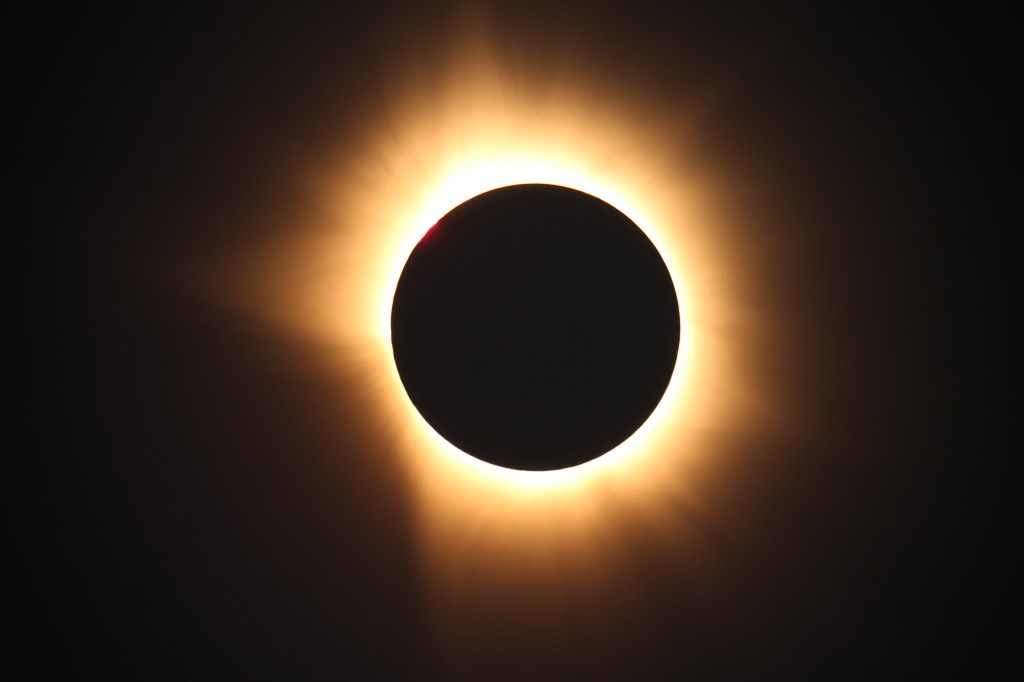
taken at Paredes de Nava, Palencia, Spain.
A Solar eclipse happens when the Sun, the Moon and the Earth are perfectly aligned and the Moon covers the entire disc of the Sun. However, what makes a total eclipse only possible is that the Sun is 400 times larger in diameter than the Moon, and the Moon is 400 times closer to the Earth than it is to the Sun. This creates the possibility for the Moon to completely block out the Sun when they are perfectly aligned. When this happens, it is the only time you can take off your special eclipse glasses, as no direct sunlight is reaching your eyes.
“What makes a total eclipse only possible is that the Sun is 400 times larger in diameter than the Moon, and the Moon is 400 times closer to the Earth than it is to the Sun.”
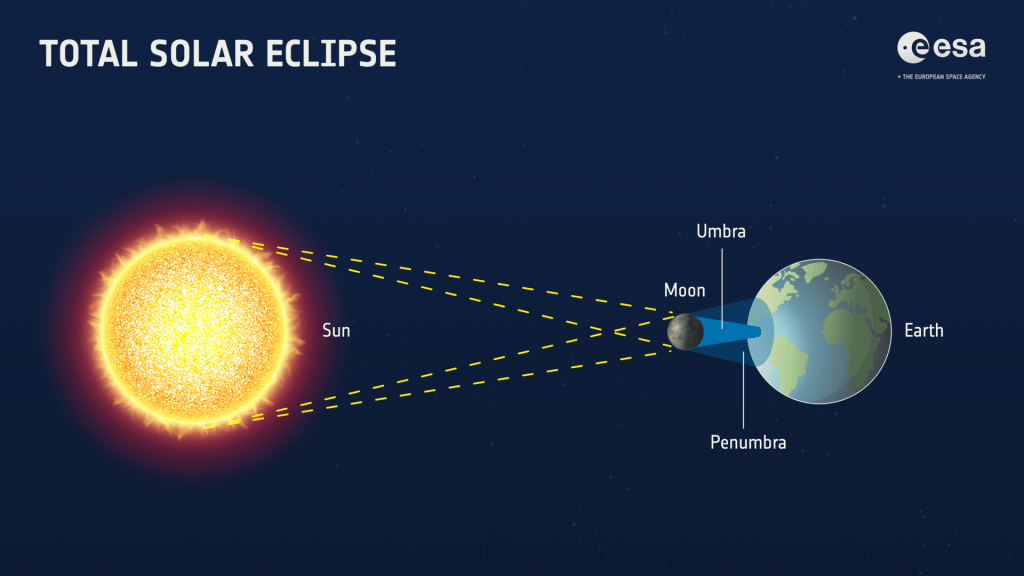
Solar eclipses are accompanied by some unique phenomena:
Baily’s beads – These are ‘drops of light’ that occur just before and after totality. They form around the Moon’s outline and are the result of sunlight filtering through the Moon’s surface, creating bright spots that appear as luminous pearls around the dark edge.
Diamond ring – It occurs at the moment of totality, when a ring of light remains visible around the moon. Just before the Sun is completely blocked by the Moon, a final point of light – the ‘diamond’ – appears; this is the result of sunlight being concentrated and refracted through a single point.
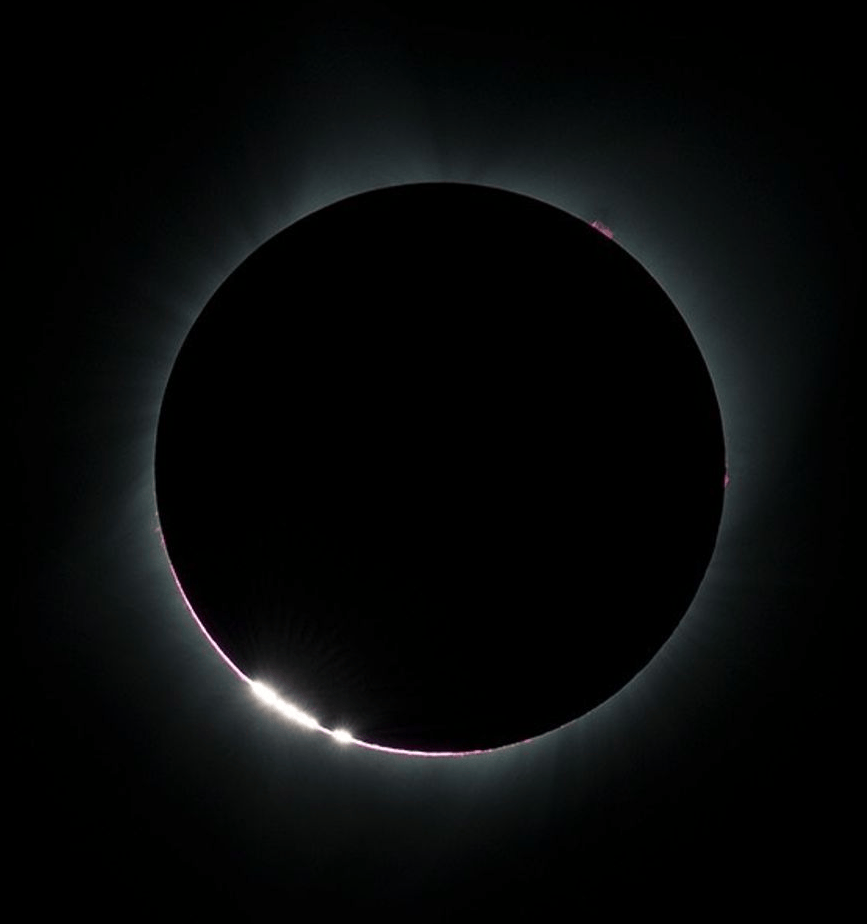
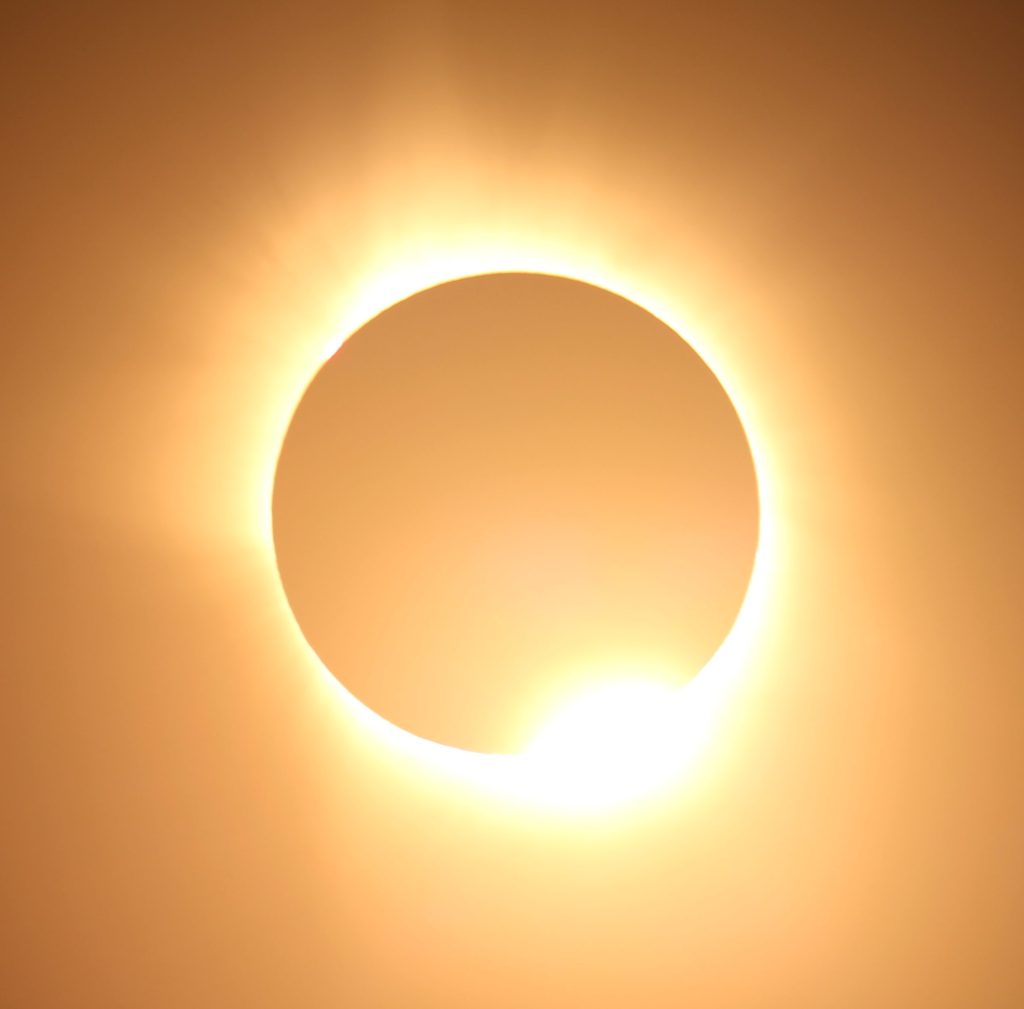
Annular eclipse
Annular eclipses are a specific type of solar eclipse in which the Moon passes between the Earth and the Sun. However, unlike during a total eclipse, in this case the Moon is further away from the Earth, and from our perspective it does not completely cover the Sun. Thus, the area known as the “umbra”, which indicates where totality would occur, does not actually touch the Earth’s surface. This eclipse reveals the so-called “ring of fire”, visible in the “penumbra” area – which appears as a wider ring than the aforementioned ‘diamond ring’ – surrounding the Moon.
In this case, protective glasses must be worn at all times, as there is no moment of totality and the sunlight is not completely blocked out.
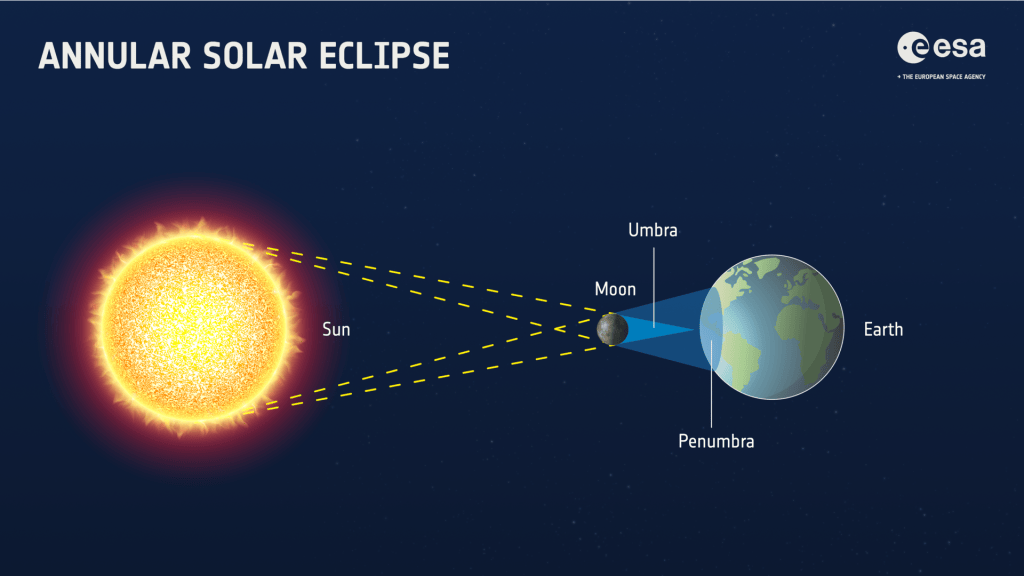
European Space Agency (ESA)
If you missed this year’s eclipse, don’t worry, and these fascinating coincidences have made us very fortunate indeed to be able to witness two new eclipses in Europe over the next two years: on 2 August 2027, a total solar eclipse will be visible in southern Spain, whilst it will be partial across the rest of Europe; and on 26 January 2028, an annular eclipse will be visible in Portugal and Spain.
References
https://www.esa.int/Science_Exploration/Space_Science/What_is_an_eclipse
https://science.nasa.gov/moon/eclipses
https://science.nasa.gov/resource/baileys-beads/
https://www.esa.int/ESA_Multimedia/Images/2018/02/Diamond_ring


Leave a Reply