
BY SINEAD BYRNE
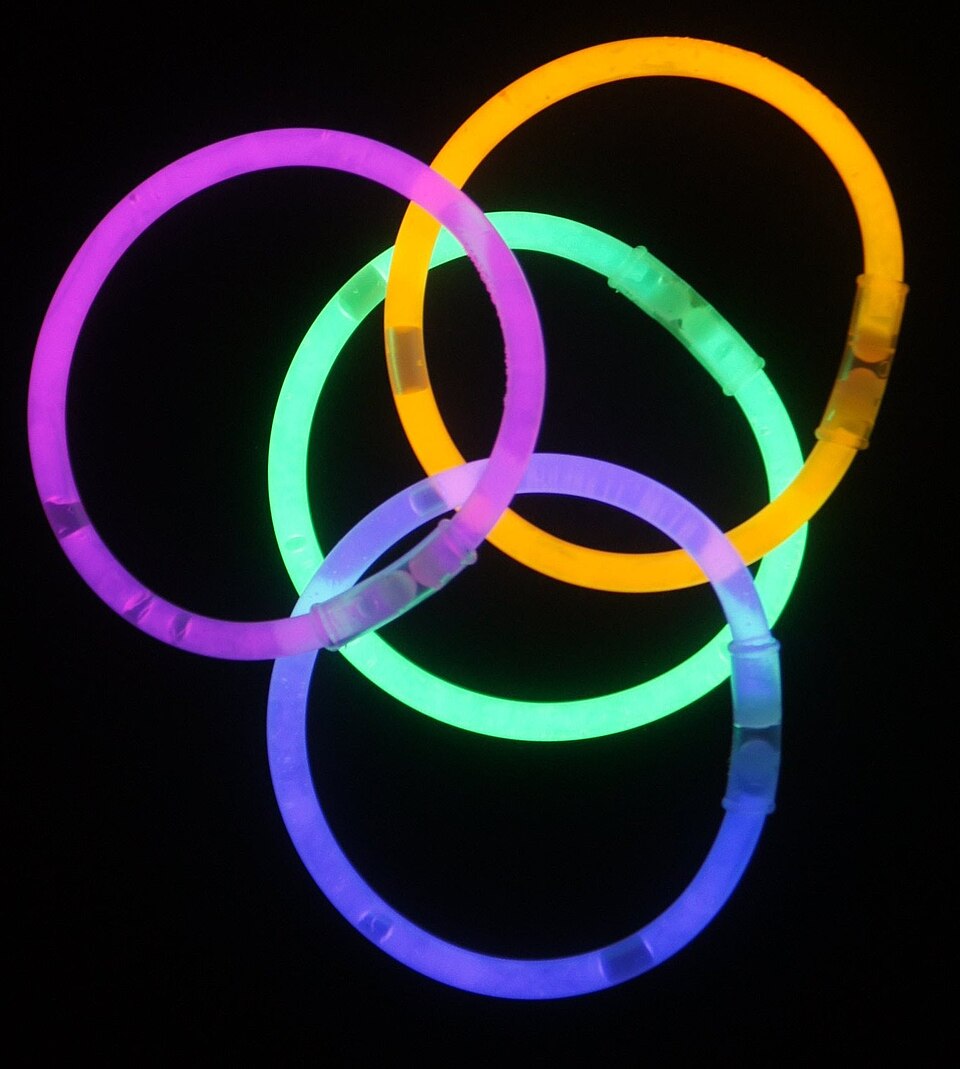
Glow sticks are a celebration staple adding colour, light, and fun to festivals, clubs, and Halloween parties. However, unlike a traditional light source, they don’t require batteries, a flame or electricity. Simply a mechanical snap. Have you ever wondered how they manage to glow without an obvious energy source? Although it may appear so, it’s certainly not magic; it’s through a chemical phenomenon called chemiluminescence.
Stick with me while I shed some light on what chemiluminescence truly means and how glow sticks actually work.
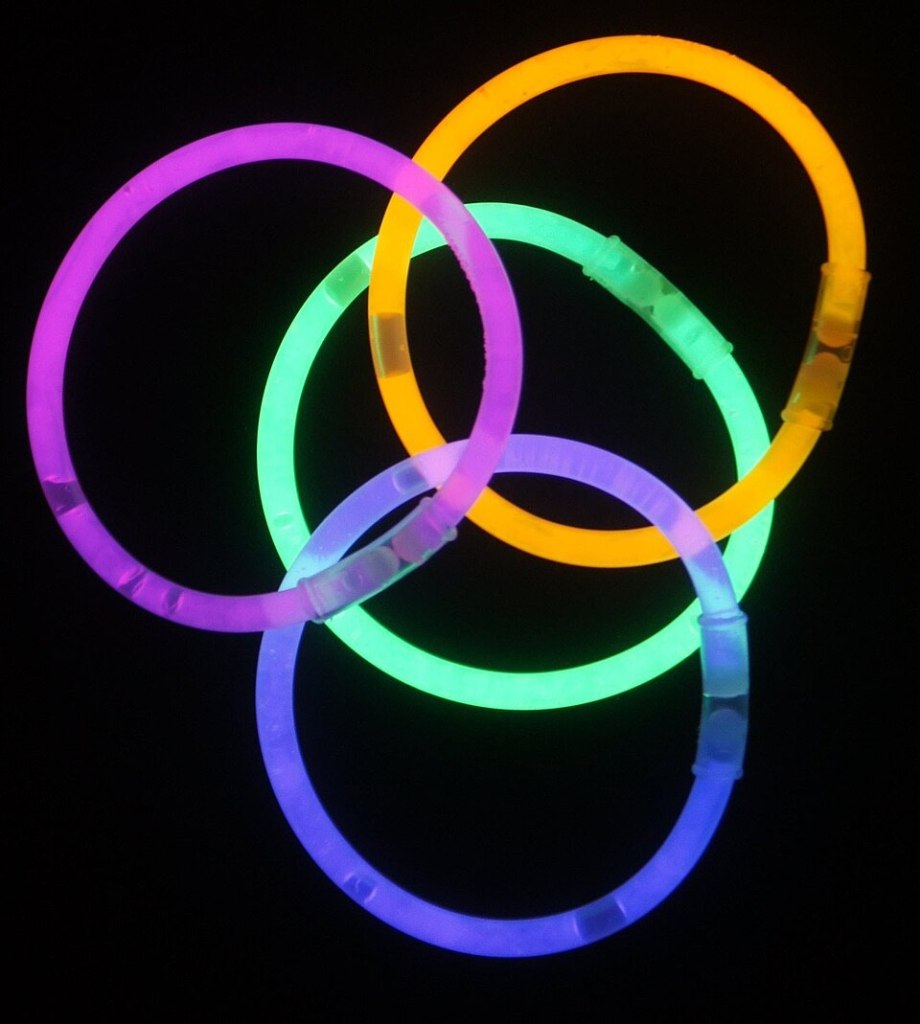
Image from Wikimedia Commons
Chemiluminescence, in simple terms, is the emission of light as a result of a chemical reaction. One of the earliest and probably the most peculiar documented examples of chemiluminescence dates back to 1669 when German alchemist Brandt had the bright idea to heat large quantities of urine in the hopes of extracting gold. Instead, he accidentally discovered the luminous element phosphorus. This discovery is considered to be one of the first examples of a chemical producing light without a flame. In 1963, Edwin Chandross discovered the peroxyoxalate chemiluminescent reaction, which is the basis for the reaction in glow sticks.
Inside the flexible outer plastic tube of a glow stick, there is an inner glass ampoule containing hydrogen peroxide and an outer solution contains an oxalate ester, a fluorescent dye, and a base. The two solutions are kept separate until the glass ampoule snaps when the glow stick is bent. The snapping of the glass not only gives off the signature snapping sound, but it allows the hydrogen peroxide to mix with the surrounding solution, which starts the reaction. Hydrogen peroxide reacts with the base and ester to form a high-energy intermediate.
The “glow” given off by a glow stick is produced through a chemically initiated electron exchange luminescence mechanism.
The high-energy intermediate briefly oxidises the dye, forming a dye radical cation. Then the intermediate decomposes into carbon dioxide. Subsequently, the cationic dye reclaims its electron from the carbon dioxide anionic molecule, resulting in the transfer of excess energy. This excess energy from the transfer promotes the dye’s electrons to a higher energy level, and as the dye’s electrons relax to their ground state, photons of light are emitted as illuminated in the diagram below.
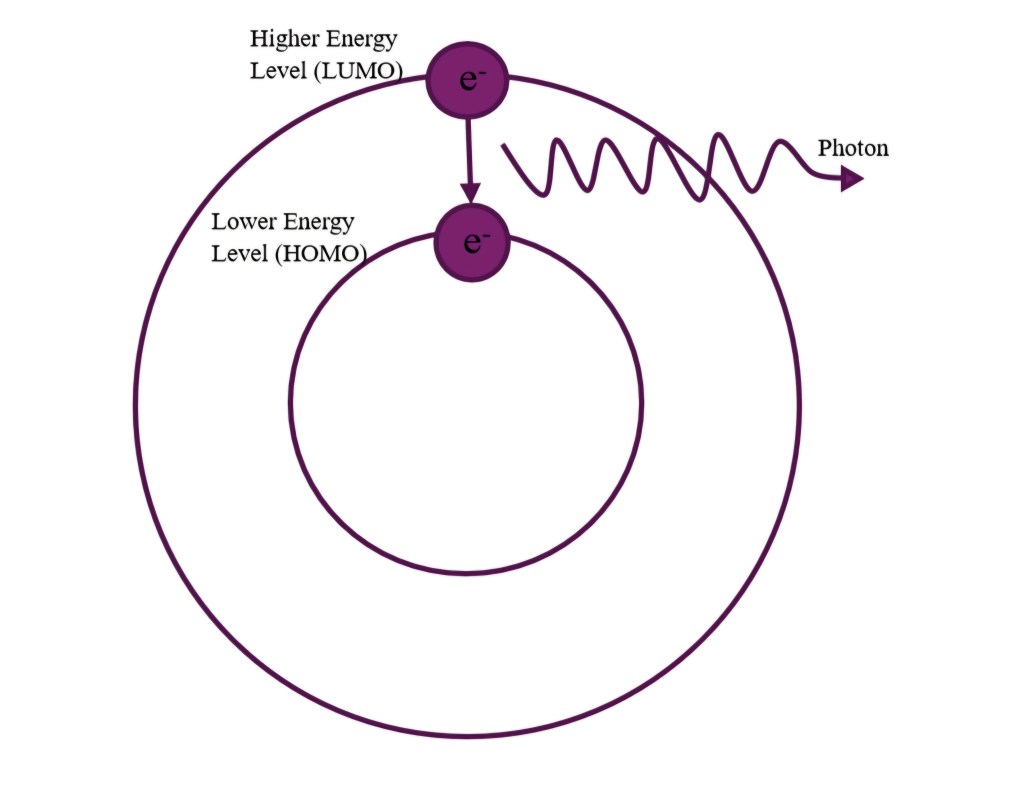
The chemical reaction is the same for every glow stick; the colour of the glow is determined by the fluorescent dyes. Different dyes have different electronic structures, and therefore have unique HOMO-LUMO gaps. Blue dyes have a large HOMO-LUMO gap, meaning they require more excitation energy. As a result of this, they tend to fade faster. Red dyes have small energy gaps, meaning they emit lower energy photons and are typically dimmer. The brightest and longest-lasting colours for glow sticks are green and yellow due to their moderate energy gap.
Did you know that temperature can change the brightness of a glow stick?
Temperature affects the rate of dye excitation, meaning a warm glow stick will glow brighter for a shorter period of time, and a cold glow stick will have a longer-lasting, dimmer glow.
A glow stick may appear simple, just snap and glow, yet there is a remarkably intricate chemiluminescent reaction unfolding inside that unassuming plastic tube. So, next time you happen to crack a glow stick, take a moment to appreciate the chemistry behind the glow.
References
https://www.arkat-usa.org/get-file/44112
https://api.pageplace.de/preview/DT0400.9781849732024_A26564178/preview-9781849732024_A26564178.pdf


Leave a Reply