
An extinction happening right under your nose, and right under your feet, with huge consequences
BY Rohan Daufresne
Insects are “the little things that run the world” (E.O. Wilson, 1987), and yet they are under threat of mass extinction, and we barely even know it! Insects are integral parts of both terrestrial and aquatic food chains, and are equally important as pollinators, nutrient recyclers, ecosystem engineers and much more.
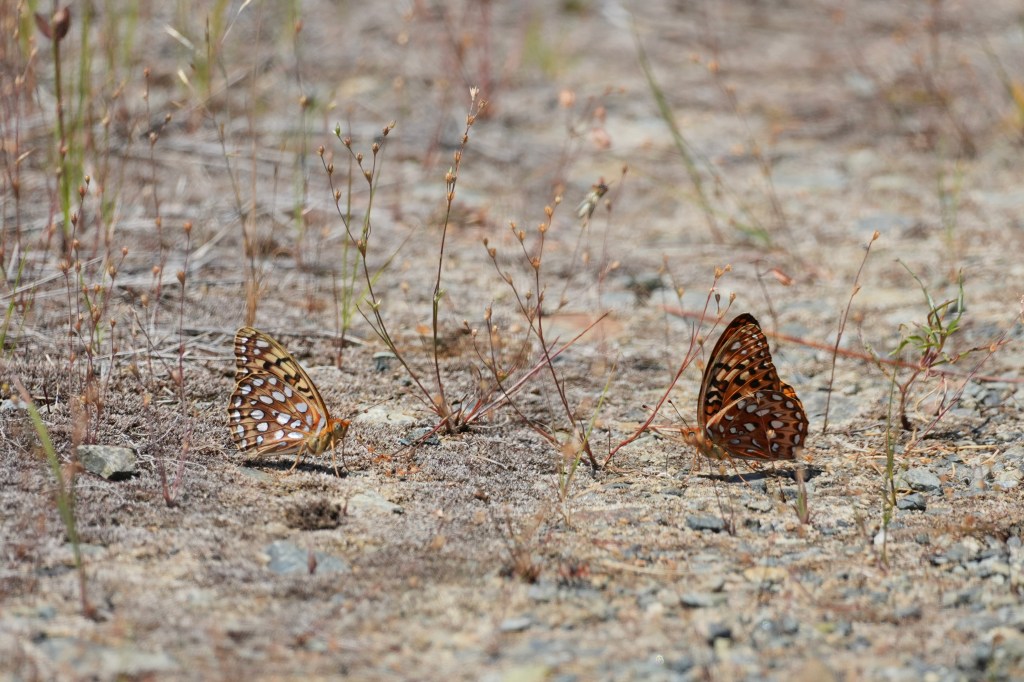
“If insects were to vanish, the environment would collapse into chaos” – E.O. Wilson
The decline of insect populations has been observed across the entire world for most major groups. Despite the looming consequences of this decline on the environment and humanity (and the pioneering PR work done for bugs by the bee movie), the world still does not care. Only 0.8% of the 1,000,000 known insect species (out of an estimated 5,500,000!) have been risk assessed for extinction.
In the first ever global synthesis on insect declines compiling 73 research papers (60 of which came from Europe and North America, making the results most representative of those regions’), Sánchez-Bayo and Wyckhuys (2019) found that 41% of the studied insect species were in decline, with 31% of them being under threat of extinction. And those are the most obvious ones we observe! This study produced an equally worrying figure: in study sites in Puerto Rico, Germany and England, insect biomass decreased by 2.5% annually.
So is there really a global decline of insect populations? We cannot confirm that it’s happening at a global scale, to all insects, and all species because of the insufficient data from various regions, but we do know it is happening here in Europe.
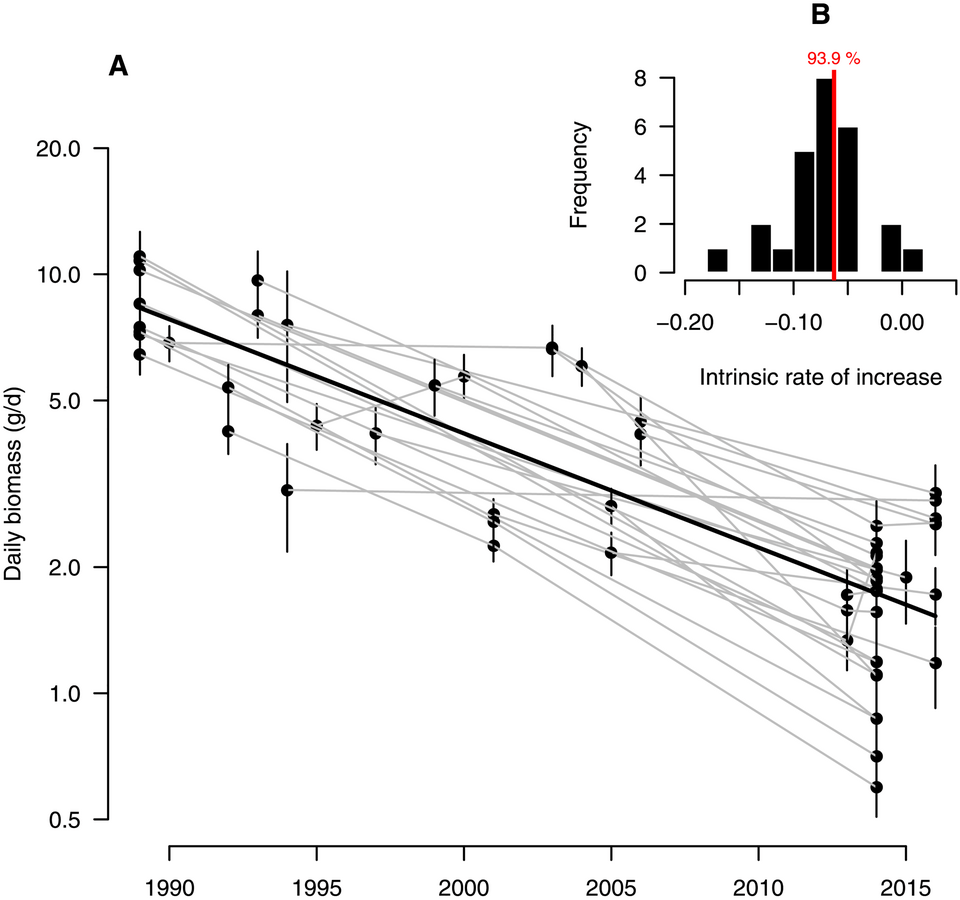
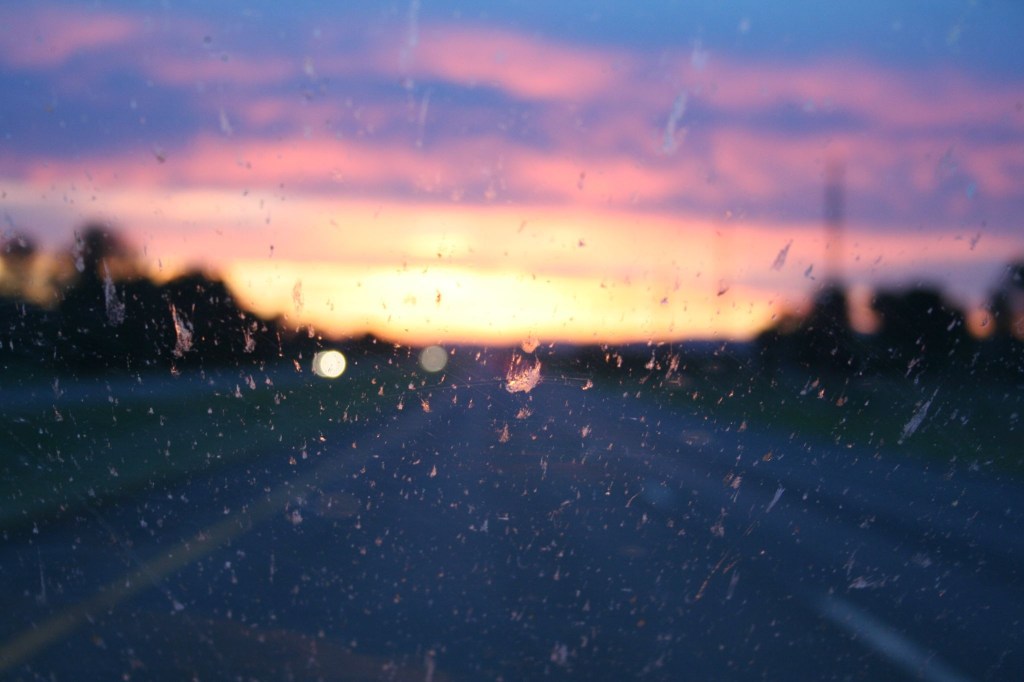
Scientists in Germany found that from 1989 to 2016, mid-summer flying insect biomass decreased by 82% (Hallmann et al., 2017). Interestingly people have observed this decline in a profoundly human way: by counting the number of insect splats that appear on their car. If you ask anyone who went on a road trip in Europe a few decades ago, they would certainly remember the sea of insects that needed to be cleaned off their windscreen afterwards. In Europe, bees and butterflies are the 2 major insect groups listed on the IUCN red list. In Ireland, since 1980, the distribution of 42 species of wild bees has declined by more than 50%, with a third of the 100 species of wild bee found in Ireland currently threatened with extinction (Fitzpatrick et al., 2007).
To inform how we can stop this decline, we must first understand what is causing it. Large-scale factors, such as human population growth, climate change and economic policy changes have resulted in agricultural development, the introduction of alien species, and urbanisation. How has all this directly impacted insects? They have lost their natural habitats and their food of course, but they are also harmed by pesticides, pests and parasites. Furthermore, these drivers combine and affect different species variably, making it hard to find suitable solutions. To inform actions that could mitigate these drivers, increased monitoring is absolutely necessary, and developing new methods include acoustic and insect camera traps.
Everyone can play their part through citizen science programmes and if you’re looking to get involved locally, the All-Ireland Pollinator Plan aims to create space for insects in your garden, in farms and on a national scale! but large scale action is needed through global, national and regional policies to protect insect populations systematically. We must also stay pragmatic. As much as saving every insect would be ideal, we sadly do not have the second coming of Noah’s Ark. So prioritising insects essential to ecosystem function and services, as well as the beautiful butterflies that enrich our lives, can make taking action easier.
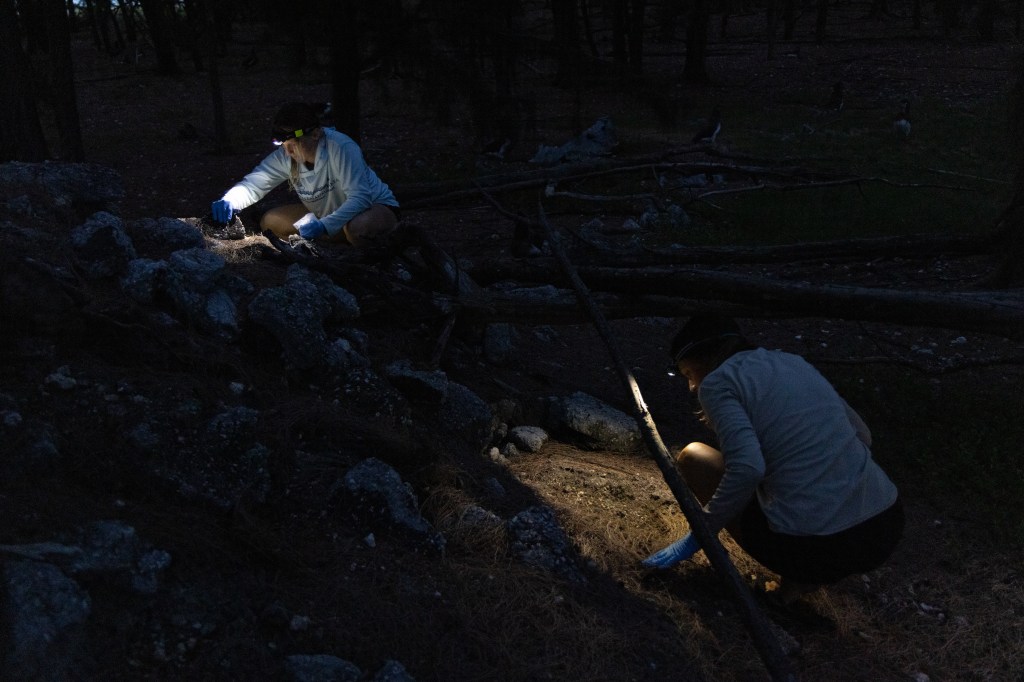
So yes, insects are declining, and although they are small, we will definitely feel the consequences. But whether by learning about insects, creating a safe place for them to live or just noticing them, you can contribute to helping these tiny critters that do so much for us without any thanks in return.
References
Fitzpatrick, Ú., Murray, T. E., Paxton, R. J., Breen, J., Cotton, D., Santorum, V., & Brown, M. J. F. (2007). Rarity and decline in bumblebees: A test of causes and correlates in the Irish fauna. Biological Conservation, 136(2), 185–194. https://doi.org/10.1016/j.biocon.2006.11.012
Hallmann, C. A., Sorg, M., Jongejans, E., Siepel, H., Hofland, N., Schwan, H., Stenmans, W., Müller, A., Sumser, H., Hörren, T., Goulson, D., & de Kroon, H. (2017). More than 75 percent decline over 27 years in total flying insect biomass in protected areas. PLoS ONE, 12(10), e0185809. https://doi.org/10.1371/journal.pone.0185809
Murray, T. (2019, July 4). The Silent Extinction of Insects – National Biodiversity Data Centre. Biodiversityireland.Ie. https://biodiversityireland.ie/the-silent-extinction-of-insects/
Sánchez-Bayo, F., & Wyckhuys, K. A. G. (2019). Worldwide decline of the entomofauna: A review of its drivers. Biological Conservation, 232, 8–27. https://doi.org/10.1016/j.biocon.2019.01.020


Leave a Reply