
BY Chiara Camellini
Piranha solutions are mixtures of concentrated sulphuric acid and 30% hydrogen peroxide, usually in a 5:1 ratio. Mixing sulphuric acid and hydrogen peroxide is an exothermic reaction, whereby significant energy is released into the surroundings. Piranha solutions also contain traces of Caro’s acid, produced upon reacting sulphuric acid with the peroxide.
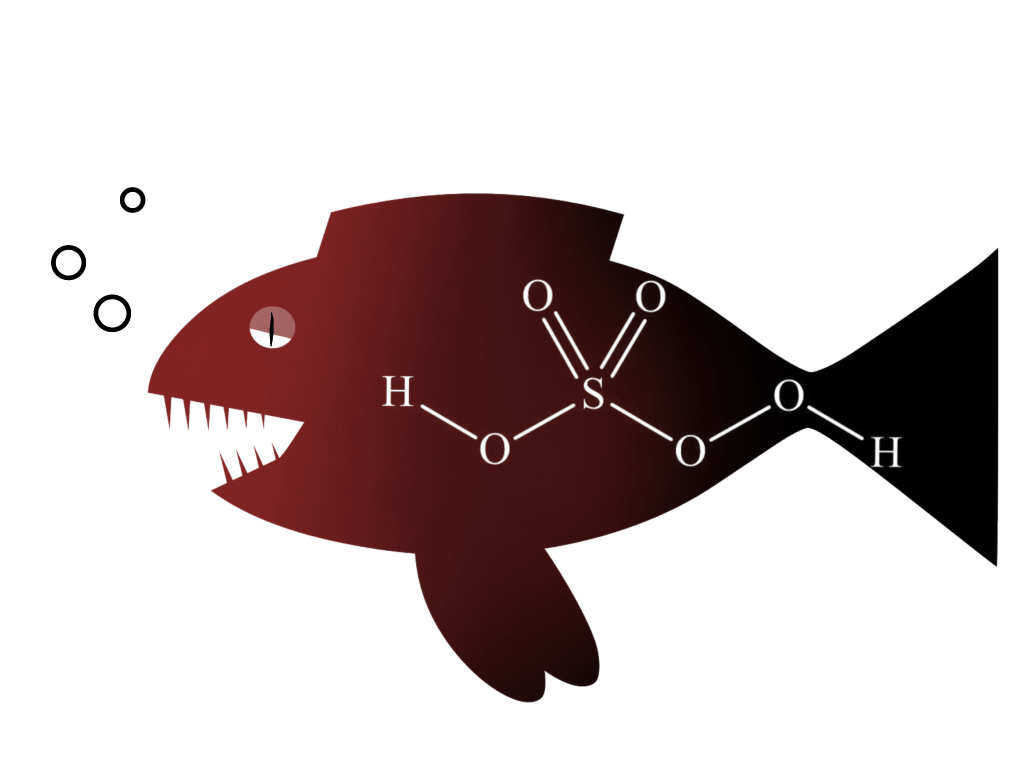
The official use of Piranha is to eliminate organic residues from substrates – this is where it gets its reputation as a corrosive used to erase forensic evidence. All true crime fans, do continue reading.
Before delving into the properties of the mixture, let us first analyse the reagents. As everything in science, the properties of a system can usually be attributed to its constituents. Sulphuric acid is, well, an acid 🙂 Therefore, it has a tendency to give up a proton. When it encounters molecules with an -OH group, as is the case for most macromolecules (proteins, carbohydrates, lipids and nucleic acids), it donates a proton, creating an H2O+ leaving group that will detach from the substrate. Thus, sulphuric acid is great at dehydrating organic matter. On the other hand, hydrogen peroxide is a mild oxidising agent that requires activation: this can be done under acidic conditions, as it the case with sulphuric acid. A mixture of the two therefore enhances the properties of both the acid and the peroxide. Caro’s acid is also a vigorous oxidising agent.
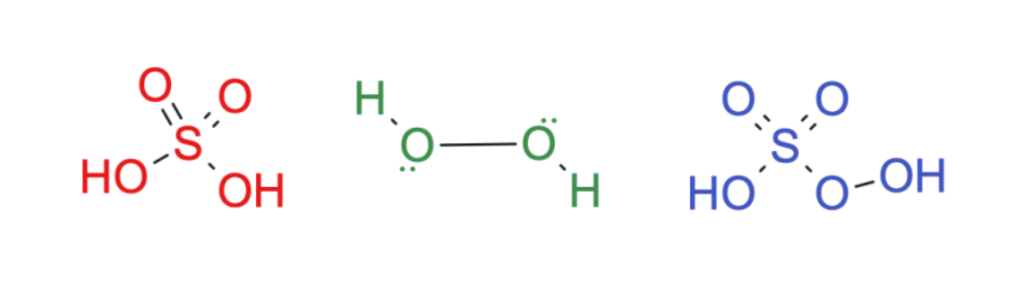
At this point, it should come as no surprise that Piranha solutions are extremely dangerous. Firstly, they are remarkably energetic. Mixing sulphuric acid and hydrogen peroxide leads to sudden temperature rises. It also results in gas evolution and hence, this cannot be carried out in a closed container because the pressure would rise excessively, resulting in an explosion. Now, adding an organic substrate really tips the balance: the mixture will energetically dismantle the substrate – the risk of explosions here is extremely high because the solution is so unstable. The three Piranha components will effectively destroy the carbon backbone of anything they encounter – thus explaining how the solution resembles the fish that is was named after. Specifically, the dehydrated carbon chains are turned into elemental carbon and water. The oxyradicals originating from the peroxide are extremely reactive and engage in a series of reactions, breaking C-H and C-C bonds. The reaction terminates when elemental carbon is oxidised to carbon dioxide.
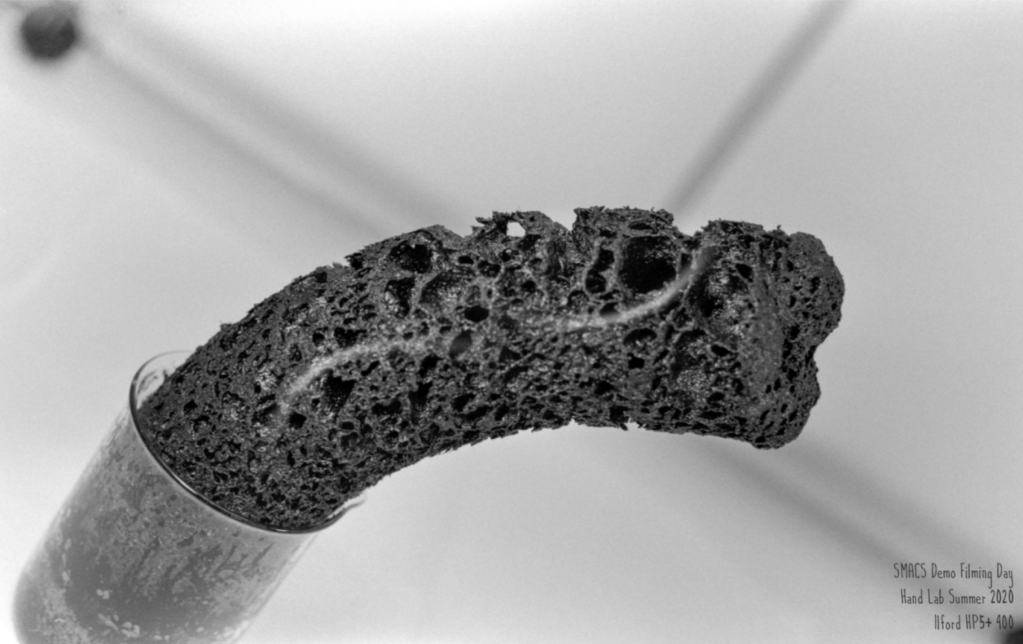
Due to its high reactivity, the mixture cannot be stored, and as you might imagine, it would not be wise to transport it. Although it might appear as an insignificant chemical due to its impracticality, it is however used in many research environments as a cleaning agent for sensitive equipment – where no organic contamination is paramount.
Despite having a reputation linked to body disposals, there are no documented cases of the Piranha solution being used to corrode post-mortem tissues. This is because it would be virtually impossible to handle it outside of a laboratory, and arguably, without several chemistry titles. Hypothetically, the solution would dissolve most organic tissues, whilst also resulting in explosions, release of toxic gases and melting of equipment. Bone material would not be fully eliminated as is mostly inorganic.
In reality, Piranha solutions are disappointing in that they are simply too much to handle… the person employing it would likely be the most harmed.
References
- T. Homa, P. Evans and K. Bahrami, Journal of Industrial and Engineering Chemistry, 2021, 104, 295–332.
- Division of Research Safety | Illinois, https://drs.illinois.edu/Page/SafetyLibrary/PiranhaSolutions, (accessed 29 September 2026).
- Generation, Use and Disposal of Piranha Solution SOP GENERATION, USE AND DISPOSAL OF PIRANHA SOLUTIONS STANDARD OPERATING PROCEDURE Type of SOP, .
- Piranha Solutions | Office of Environmental Health and Safety, https://ehs.princeton.edu/laboratory-research/chemical-safety/chemical-specific-protocols/piranha-solutions, (accessed 29 September 2026).


Leave a Reply