
By Aifric Mangan
Our gut is made up of trillions of microorganisms that are hugely influential to our health. But with prebiotic drinks lining the shelves of our favourite stores and ‘gut friendly diets’ being all the rage, it’s difficult to distinguish truth from trend. Do these supplements really work and what can we do to maintain a healthy gut environment? In this article, we take a closer look at the gut microbiome.
The gut microbiome is composed of hundreds of species of fungi, viruses and bacteria. This may seem strange, but is absolutely normal and essential to our health. There are trillions of microorganisms in the gut, both ‘good’ and ‘bad’ microbes. Disease-causing microorganisms can be harmful, but maintaining a large range of the ‘good’ microbes can be central to reducing the risk of diabetes, inflammatory bowel disease, cardiovascular disease, and some cancers.
This might be a lot to digest, (no pun intended) but bear with me. Bad bacteria- we don’t want, good bacteria- are good for us and we want many different types. Thankfully, we can do many things to support a happy gut, which is great for our health. We’ve all heard of the ‘Mediterranean Diet’ and its astonishing health benefits. But why do provisions of fresh vegetables and beans, whole-grains and cheese have us all itching to trade in sliced pans of bread and Kerrygold butter for what might be considered ‘exotic’ to some in Ireland? Firstly, it provides relief from the harsh and processed ‘Western Diet’ that can deplete diversity of gut microbiota. Secondly, this diet promotes diversity in the digestive system by supplying our gut with fibre and prebiotics, allowing it to thrive.
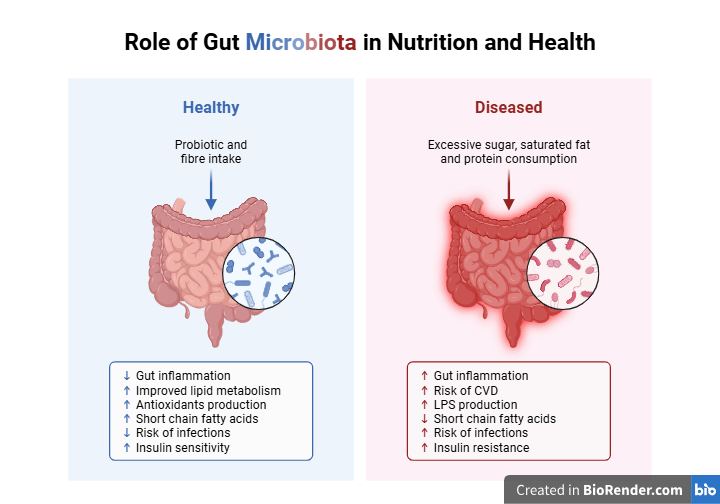
Prebiotics are dietary fibres that nourish microorganisms. Probiotics, on the other hand, are live microbes that stimulate digestion and help control the growth of harmful microorganisms. Probiotics join select populations already in your body. Fermented products are a great source of natural probiotics. For example, yoghurts, kefir, kombucha and kimchi may improve diversity in the gut.
So, do prebiotic supplements work? Basically, we don’t really know yet. Some evidence suggests probiotics and prebiotics may be helpful, however there is no proof that supports that these benefits are universal, or that these products are safe for everyone. Medical journals recommend sticking to natural sources of probiotics or fibre rather than gravitating to prebiotic drinks or foods heavily marketed as magical ‘superfoods’.
On the other hand, we can still make gut conscious choices, by having a diet rich in fibre and fermented products, while focusing on diversity in food choices. This can all help maintain a healthy, happy and nourished microbiome.
 NeAr Science Magazine
Leave a comment