
By Baran Dönmez
Imagine waking up in a world where your morning coffee doesn’t brew properly, your favourite sneakers start falling apart or your trusty concrete sidewalks crumble away. It might sound like a scene from a dystopian movie, but the truth is, that our everyday lives depend on the magical world of chemistry. Come along, let’s take a look together!
Surfactants
Try to imagine a world with no dish soap, no hand soap and no detergents to keep our everyday spaces clean. Our kitchens would be cluttered with grimy dishes and our clothes would lose their fresh appeal. But how do these miraculous cleaning chemicals work and do they really get rid of all the dirt, grease, and invisible germs hanging around on our hands, dishes, and clothes? At the heart of these cleaning agents are molecules called surfactants.
Surfactants are made from two different parts; the hydrophilic head, which attracts water and the hydrophobic tail, which repels it but attracts grease and dirt. The tail ‘cosies’ up with grease and dirt particles, isolates them from water and whisks them away from their unwanted locations. This microscopic dance of molecules not only cleans surfaces but also helps to eliminate bacteria and other unwanted guests. By trapping and removing these elements, surfactants play a critical role in keeping our kitchens, bathrooms, and clothes hygienic.
Cutting onions
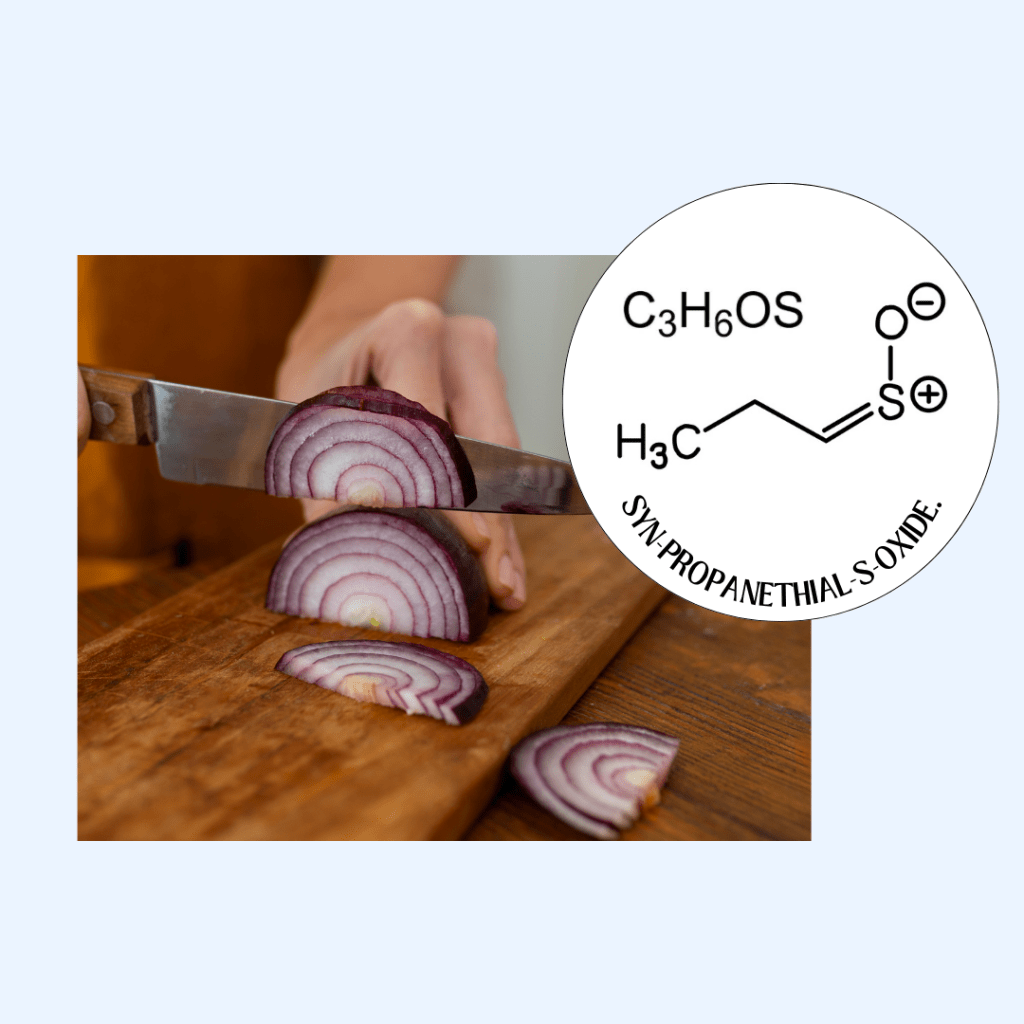
Even on your happiest day, cutting an onion will tear you down immediately. Did you ever wonder why? When you slice into an onion, you break open its cells, releasing sulphur compounds, especially propanethial-S-oxide, which mixes with water in our eyes forming an acid that irritates them. Our bodies recognise the threat and in order to prevent the direct exposure, our eyes start producing tears. So next time you find yourself crying over onions, remember that you’re not alone!
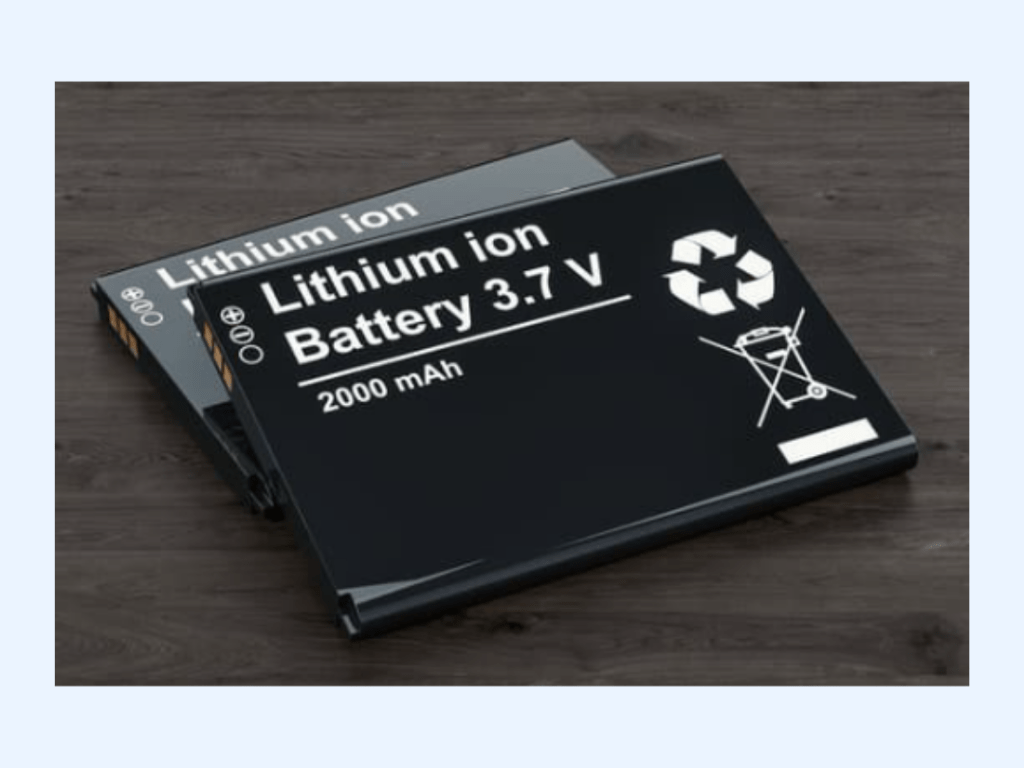
Lithium-ion batteries
We’ve all experienced our phones warming up after a long scroll session. Without muscles to exert or a heart to race, why does your phone still warm up? Inside your phone there are energy storage units called lithium-ion batteries, which constantly undergo redox (reduction-oxidation) reactions.
Redox reactions involve the flow of electrons, generating electricity and powering our devices. Since these reactions aren’t one hundred percent efficient, part of the energy gets released as heat. This causes your phone to warm up during constant usage. Continuous heat exposure can shorten the lifespan of the electronic device, which is why coolers or fans are often used to prevent overheating. You may have realised that your phone heats the most when connected to the charger. Using the phone while charging, the lithium-ion battery is not just supplying energy but also undergoing a process called the energy transfer process, where electrical energy is stored for later use. Doing this a few times won’t cause much trouble, but when it becomes a habit, studies have shown that it can negatively impact battery health over time. In fact, this is exactly why major phone manufacturers advise against using your phone while it is charging.
Chemistry deserves a spot in our daily gratitude list, because it is not only a subject confined to dusty textbooks and lab coats, it is the limestone holding historic buildings together, the cleaning supplies that keep harmful bacteria away, the battery that powers our lives and the tears that protect our eyes. The tiny molecules that form the building blocks of everything around us are constantly interacting in ways that make life not only possible but remarkable. From the reactions that give rise to the warm, comforting taste of your coffee, to the electronics that keep your phone running smoothly, chemistry is quietly making life easier, safer, and more enjoyable. So, the next time you marvel at a beautiful sunset, enjoy a delicious meal or simply breathe in the fresh air, take a moment to recognize the chemistry at work. After all, the world we live in would not be the same without it.
- Pharmacogenomics: how personalized medicine is sculpting the future of medical treatments
- Think Plants Are Harmless? Meet Nature’s Hidden Predators – Carnivorous Plants
- Quasicrystals: The Man who Cried Crystal
- Neutron Stars: Reinvention After Collapse
- Gut bacteria: Friend or Foe? Debunking the myths of gut health.
 NeAr Science Magazine
Leave a comment