
Curious Crocodiles
By Ines Martínez
As we’ve all heard before, several factors affect the genetic makeup of all life forms since fecundation. However, you will be surprised by the role of temperature in developing a particular reptile, the crocodile.

The great difference between the number of female crocodiles and male crocodiles, often as high as 10 females per male, is not coincidental. Studies have shown that the sex of crocodiles is dependent on the temperature of the soil where egg incubation is taking place; if the temperature is cool, around 30 °C, the hatchlings are all female, while in warmer temperatures, around 34 °C, all hatch males!
This leads to the question: How will climate change affect the survival of the species?
Singing Black Holes?
By Ines Martínez
A fun fact about black holes is that they can produce musical notes! While sound can’t travel through the vacuum of space, black holes can create ripples in nearby gas and dust that resemble deep cosmic notes. In 2003, NASA discovered a black hole in the Perseus galaxy cluster emitting a sound wave at a frequency calculated to be about 10 million years per cycle, or a B-flat 57 octaves below middle C—far beyond the range of human hearing. While we can’t hear it directly, scientists have sonified the data by scaling it into audible frequencies, effectively letting us listen to a black hole’s voice!

A new way of detecting Parkinson’s?
By Inés Martínez
A new ground-breaking study from the University of Manchester has shown that Parkinson’s disease could be detected by the analysis of sebum, the skin’s oily secretion.
This was discovered thanks to Joy Milne, a Scottish woman with hyperosmia (a super heightened sense of smell), who discovered she could detect Parkinson’s disease through a distinct musky odor, first noticed on her husband years before his diagnosis.

This groundbreaking research, supported by the Michael J. Fox Foundation, holds promise for earlier non-invasive diagnoses and improved patient outcomes due to the promised detection of the chemicals released by the skin, which give that specific described odour.
The key chemicals detected were: perillic aldehyde, not commonly found in human secretions; octadecanal, the main responsible for the odor and also not commonly found in secretions; as well as other abnormally high hydrocarbons and aldehydes. This particular chemical fingerprint could be detected by mass spectrometry, facilitating detection.
Cholesterol : is it as easy as good or bad?
By Jacob Whiteman

Cholesterol is one of the most important biomolecules in the body, being the key stabiliser in every cell membrane of every cell in our bodies. Its importance in metabolic disorders has given it much fame, and this has led to the terms “good” and “bad” cholesterol. Wouldn’t you be surprised to know, however, that these terms don’t refer to cholesterol itself, but it’s transporters!
Your body uses two main transporters for cholesterol, those being LDL and HDL. HDL is considered the “good” one, as it picks up excess cholesterol from tissues and brings it to the liver to be broken down or redistributed. LDL, on the other hand, ships cholesterol to other tissues. In low quantities, this is fine, but in excess it can build up in the arterial walls, causing cholesterol related conditions. While these transporters aren’t inherently bad, an excess of LDL is much more detrimental than an excess of HDL, which is why the terminology “bad” and “good” is useful to understand these concepts.
Butterfly wings : the birth of colour from a cocoon
By Jacob Whiteman
An icon of beauty, butterfly wings have hypnotised humans along the centuries.
While some use pigments to display such colours, as most animals do, others have a different trick up their sleeve in the form of minute, complex structures. These are microscopic and reflect light in such a way that it produces beautiful, intense colours, most often blues and greens. Since its discovery, many have mimicked its properties for display technology and nano-optic security, inspiring a new wave of innovations.

Roman mythology, still in our skies today
By Inés Martínez
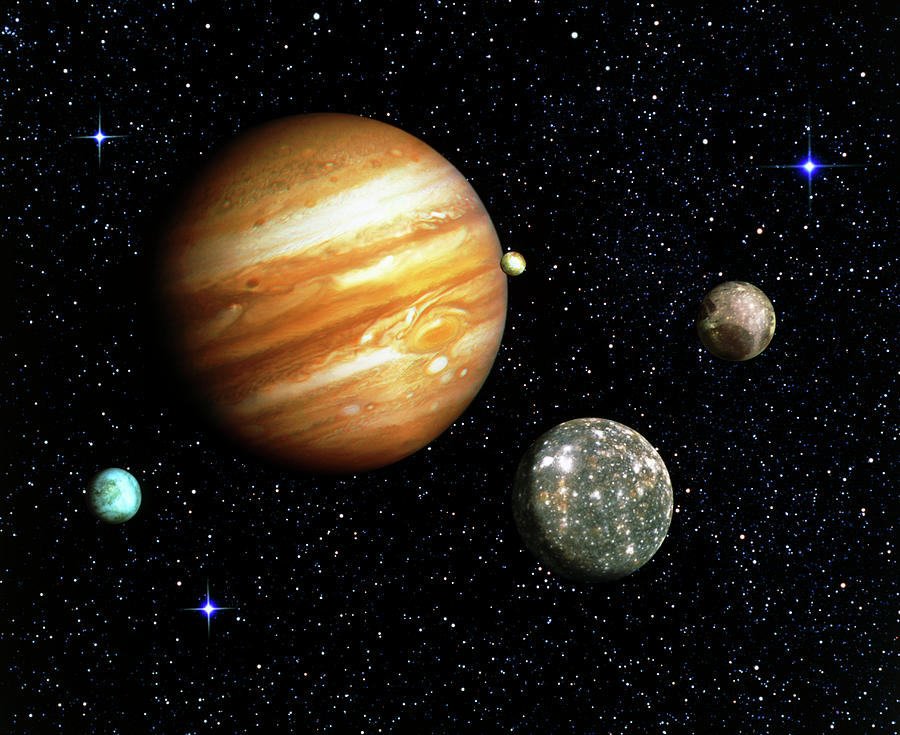
Jupiter is the largest planet in our solar system, as well as the king of the gods and the God of thunder and the sky in ancient Roman mythology. But the association of the planet with the King of Gods by the Romans didn’t end with them! The first four of Jupiter’s moons discovered by Galileo Galilei in 1610 got the final names of Ganymede, Callisto, Io, and Europa by suggestion of Simon Marius. Turns out these are not randomly chosen names, but the names of some of the many lovers of the Roman god Jupiter.
Nowadays, the International Astronomical Union (IAU) has named all of the later-discovered Jupiter moons after his lovers; thankfully, the chosen God was known to have a pretty vivid love life due to Jupiter having up to 95 moons. As a last nerdy contribution, NASA sent a satellite to check over Jupiter and its moons in 2011 called Juno Spacecraft; well, turns out Jupiter and his lovers are gonna be monitored by his goddess wife Juno!
 NeAr Science Magazine
Leave a comment