
Sashwita Satish
Photography by Merve Sahmaran
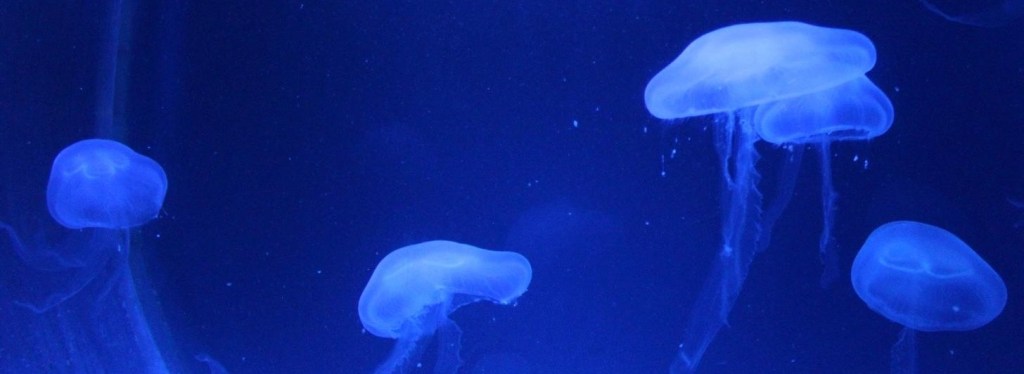
While walking on the beaches of Matsu Islands in Taiwan, or Havelock Island in India, we observe some magical or glimmering lights in the water. Ever wondered what this is? It is not some kind of underwater magic, but a phenomenon referred to as bioluminescence. This occurs when an organism produces visible light through a natural chemical reaction. This phenomenon is most common among fish, squid, and what we call the gelatinous zooplankton—such as jellyfish and comb jellies, and other animals that are mostly made of water.
According to Shimomura (2006), bioluminescence is “the emission of visible light by biological systems, resulting from enzyme-catalyzed chemical reactions in which chemical energy is converted directly into light energy.”
The mechanisms behind bioluminescence vary among organisms and often involve complex pathways that require cofactors, auxiliary enzymes, ATP, and multiple intermediate steps. Mainly, this process involves the enzyme luciferase, which catalyses the oxidation of luciferin to produce light. Some luciferase enzymes exhibit a unique temporal control mechanism, wherein they bind to and stabilize oxygenated luciferin molecules, but delay light emission until certain cations are present. This creates a highly regulated light producing system, allowing organisms to control when and how they emit light.
It is natural to wonder what kind of use bioluminescence might have in nature. Deep-ocean environments are almost completely dark, yet light is still essential in these ecosystems. Thus, bioluminescence may provide a survival advantage in the darkness of the deep sea, helping organisms find food or even acting as a defense against predators. Bioluminescent organisms like Noctiluca scintillans in oceans create glowing waves, and animals like anglerfish emit light to lure prey in deep ocean waters. This light emission is used by many marine animals for communication, camouflage, or defense.
Recently, a curious anglerfish was found on the Tenerife island coast ‘looking for light’. One popular belief according to the article by Dan Aulbach, is that the anglerfish swam up to see the sun for the first time before it passed away. One important lesson that this fish and the phenomenon of bioluminescence in the deep sea teaches us is that light is always there, even in the darkest places.
Apart from aquatic animals, land fireflies use bioluminescence signals to mate while glowworms use them to attract prey. Some fungi, like Mycena chlorophos, emit a greenish light, likely to entice insects for spore dispersal. At a smaller scale, bioluminescent bacteria, like Vibrio fischeri, form symbiotic relationships with sea creatures, used to counter-illuminate. The bacteria produce light through bioluminescence, helping the squid to hide by matching the brightness of the ocean surface, so they don’t cast a shadow and get spotted by predators.
The colours produced by bioluminescence vary greatly among different species depending on the arrangement of luciferin molecules. Luciferin is the compound that actually produces light. For example dinoflagellates appear yellow, green, brown, blue, or red, depending on the main pigments present in their cells. Red dinoflagellates, such as Gonyaulax, often undergo rapid multiplication, causing the sea to appear red (a phenomenon known as red tides). The toxins released by these large populations can even kill other marine animals, such as fish. The light they produce is often referred to as “sea sparkle.”
Amazingly, bioluminescent proteins, such as GFP, are increasingly utilized in medical research to track cellular processes, for cancer research, and understanding gene expression. The ability to visualize cellular activities in real time significantly enhances diagnostic and therapeutic advancements, offering promising solutions in the study of diseases and the development of new treatments.
Bioluminescence can serve as an incredibly powerful tool for understanding marine ecosystems. It provides valuable insights into the health of oceans, helping scientists monitor harmful algal blooms, or biodiversity shifts. By utilizing bioluminescent signals, researchers can gain a deeper understanding of the intricate web of life in the ocean, advancing both ecological and environmental studies.
- Pharmacogenomics: how personalized medicine is sculpting the future of medical treatments
- Think Plants Are Harmless? Meet Nature’s Hidden Predators – Carnivorous Plants
- Quasicrystals: The Man who Cried Crystal
- Neutron Stars: Reinvention After Collapse
- Gut bacteria: Friend or Foe? Debunking the myths of gut health.
 NeAr Science Magazine
Leave a comment